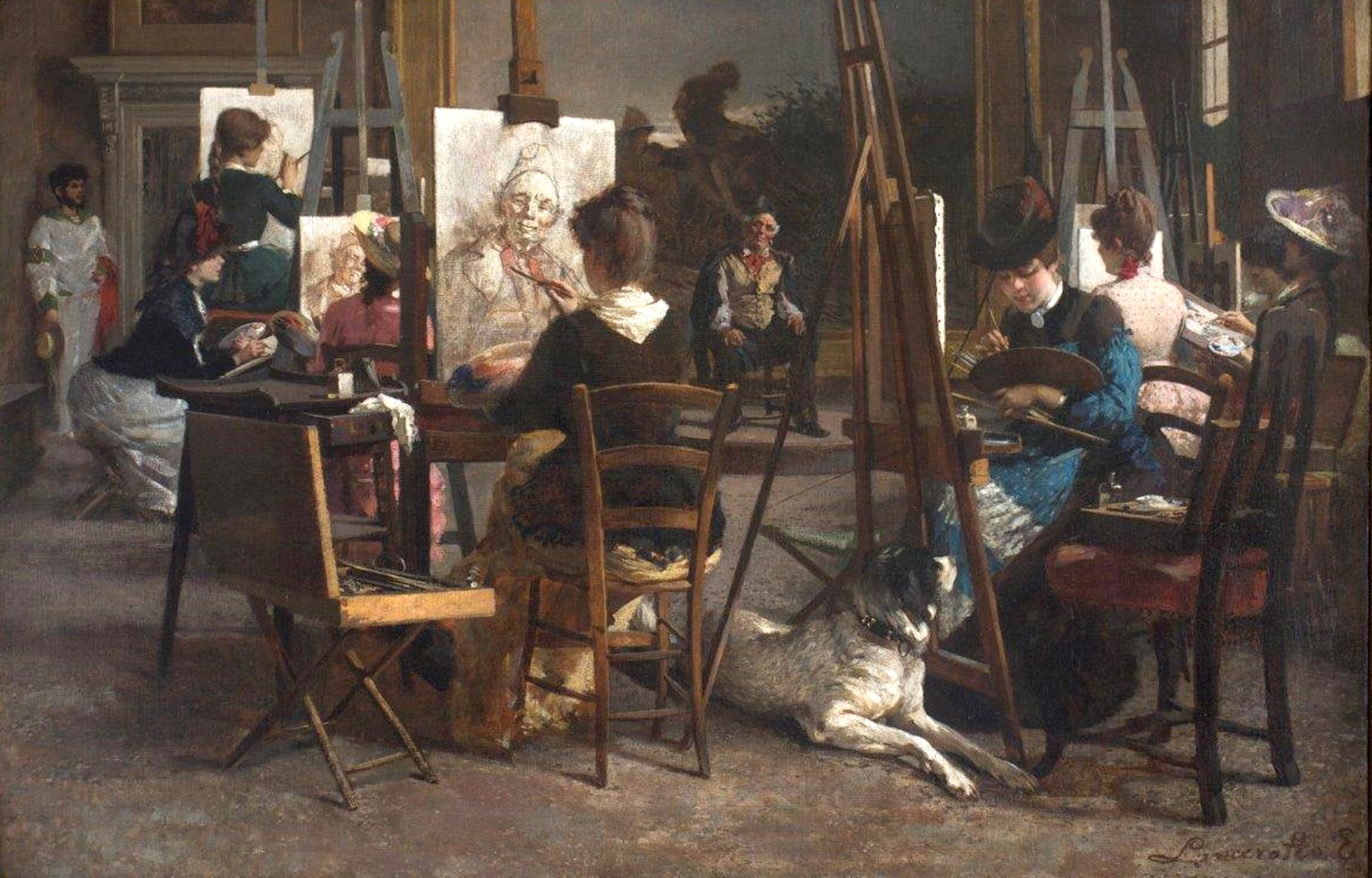
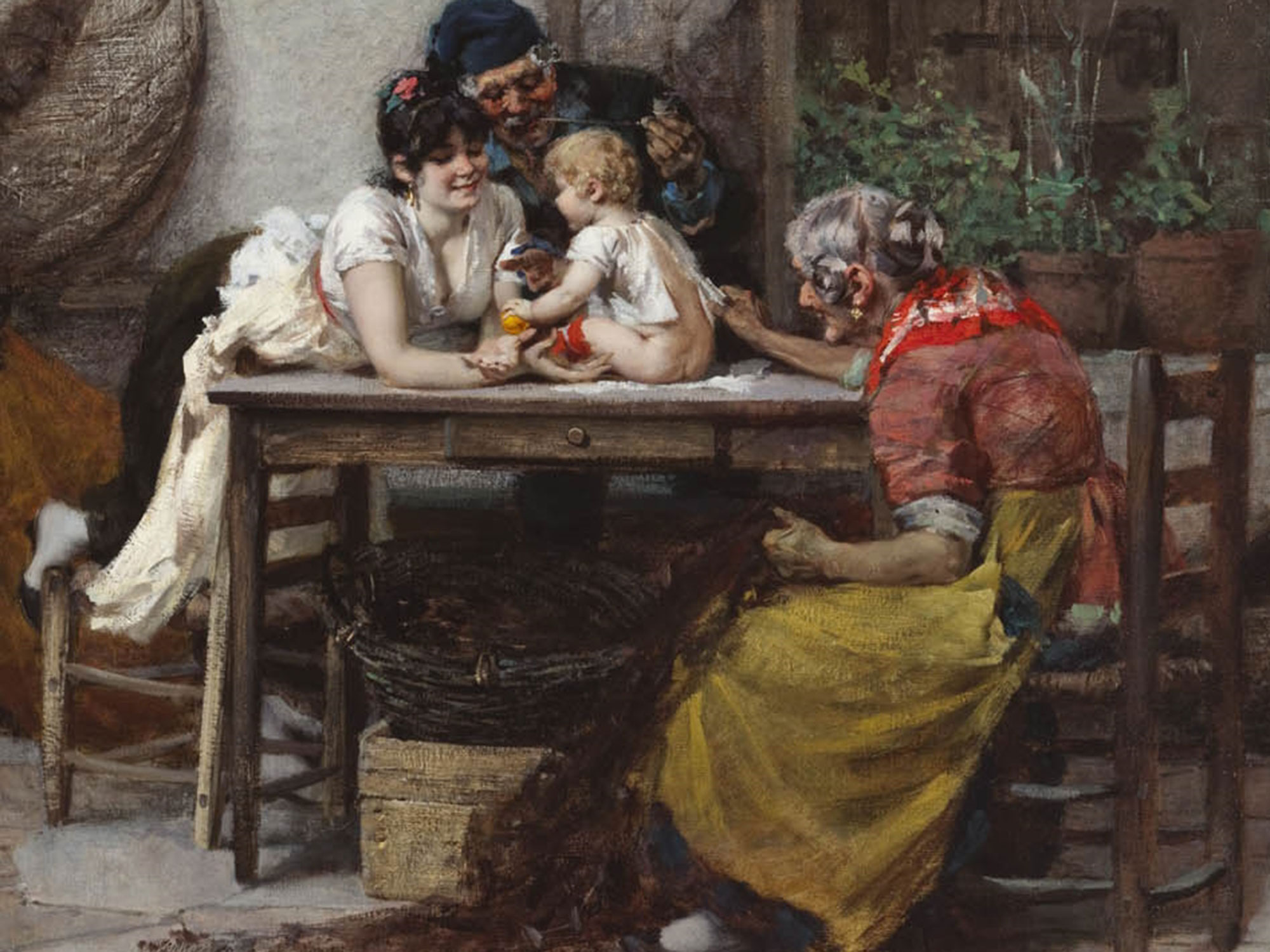
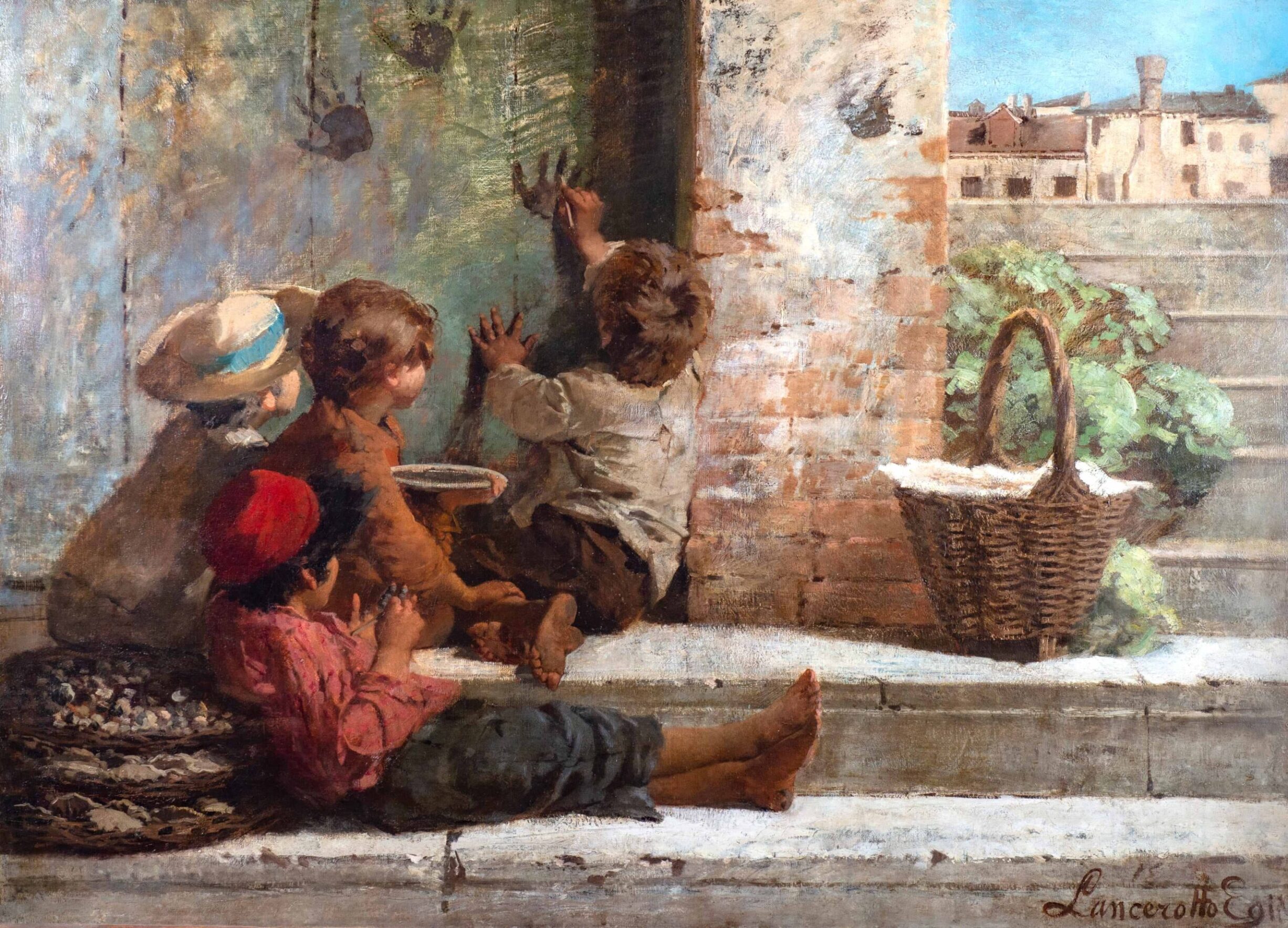
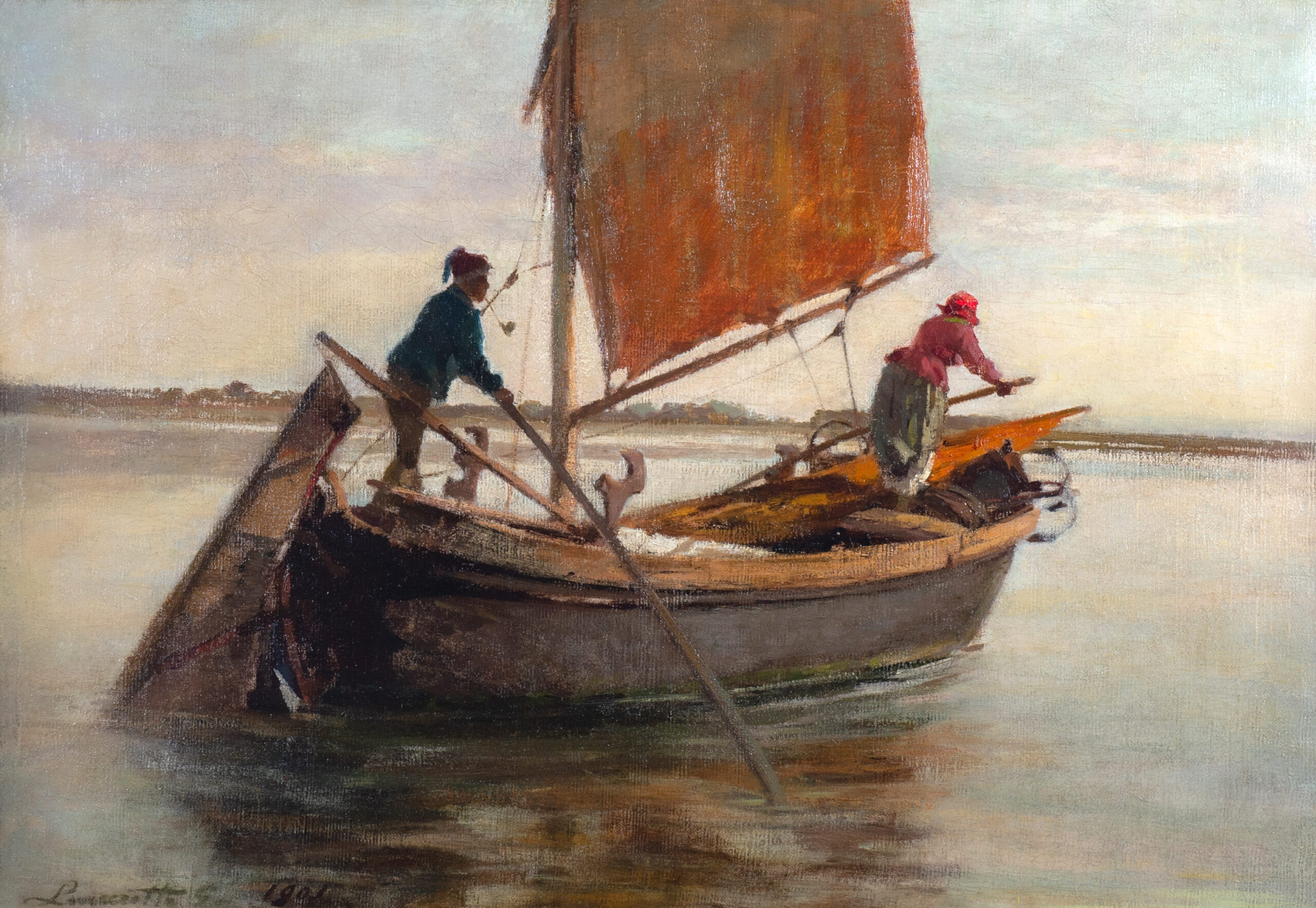
Egisto Lancerotto was born in Noale in 1847. When he was only twenty, he attended the Academy of Fine Arts in Venice and, thanks to the vicinity to a number of good teachers, passed with flying colors. “Soon enough – says Eleonora Marcato, Art Historian – he leaves behind the most academic themes to practice Genre and portrait painting and, with quickly-applied and impressionist brushstrokes, he recounted the stories of an exuberant working-class Venice through female characters wearing folk clothes and engaging in common everyday life activities. He’s always favored genre painting, interiors with female characters and portraits, often depicted with focus on their shrewd femininity.” He hosted several exhibitions in Italy in cities such as Torino, Genoa, Milan, Rome and Florence, as well as in Europe in Nice, Munich, Paris and Vienna. He exhibited his works at the Venice Biennale four times, the last one being in 1910. He passed away in 1916.
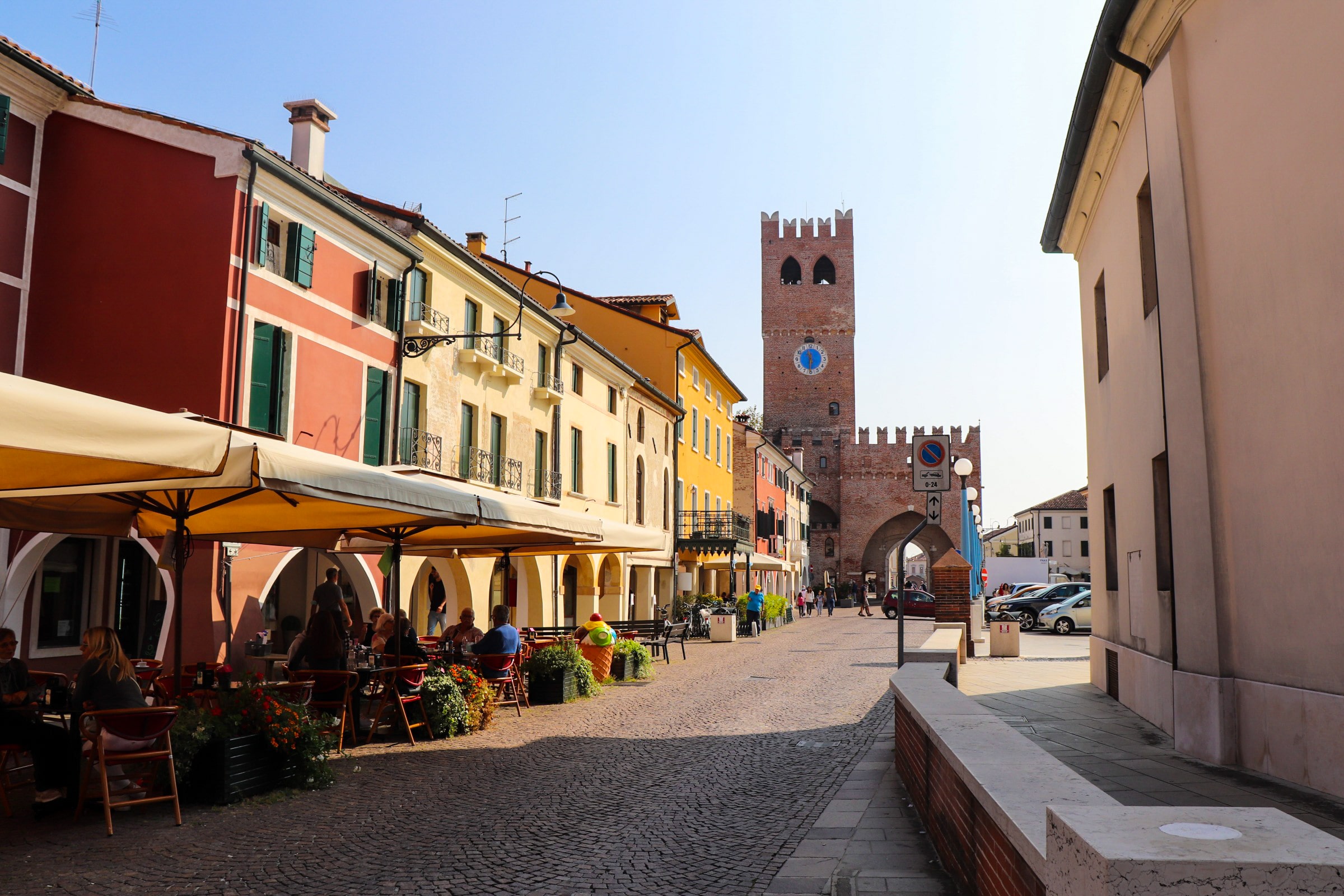
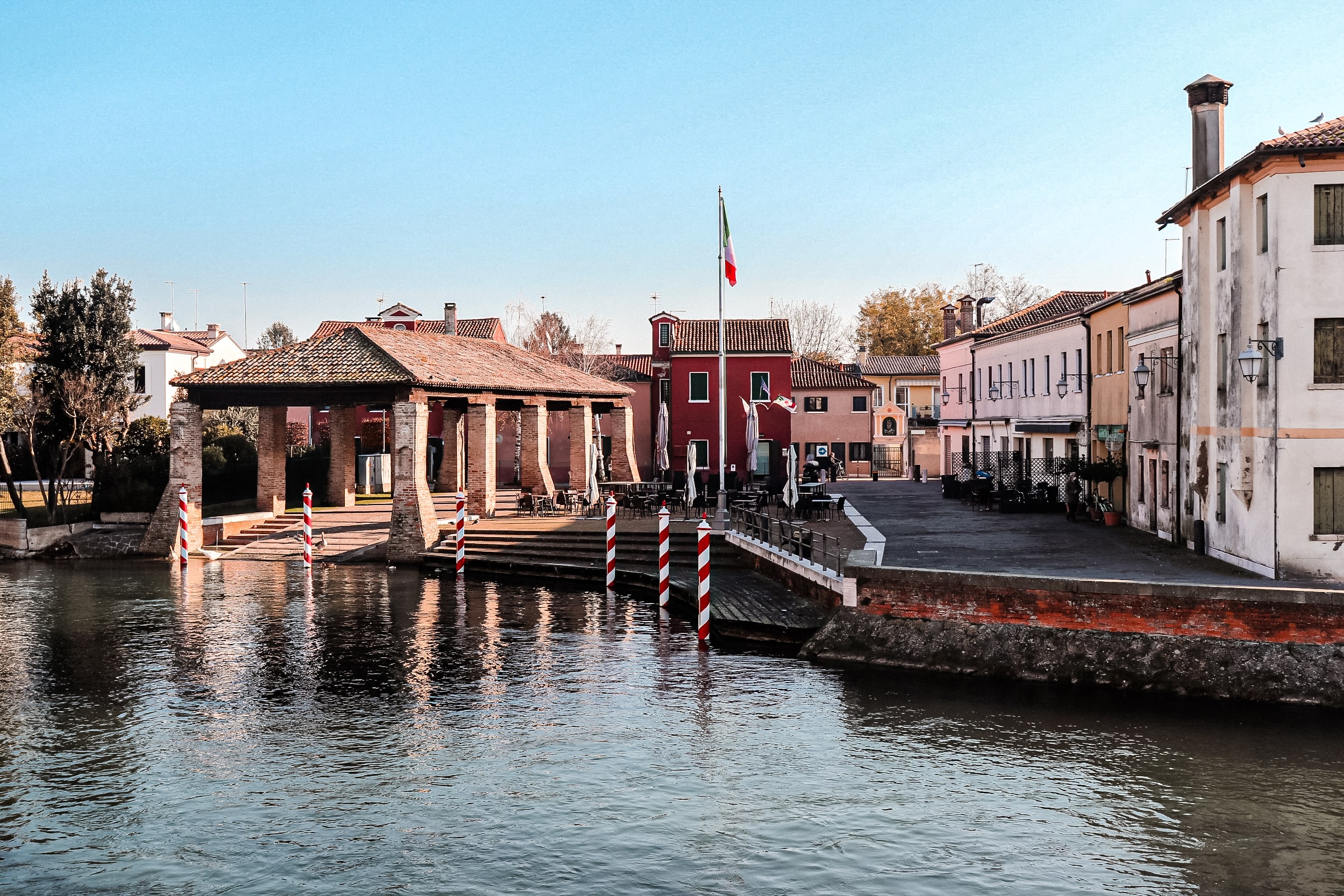
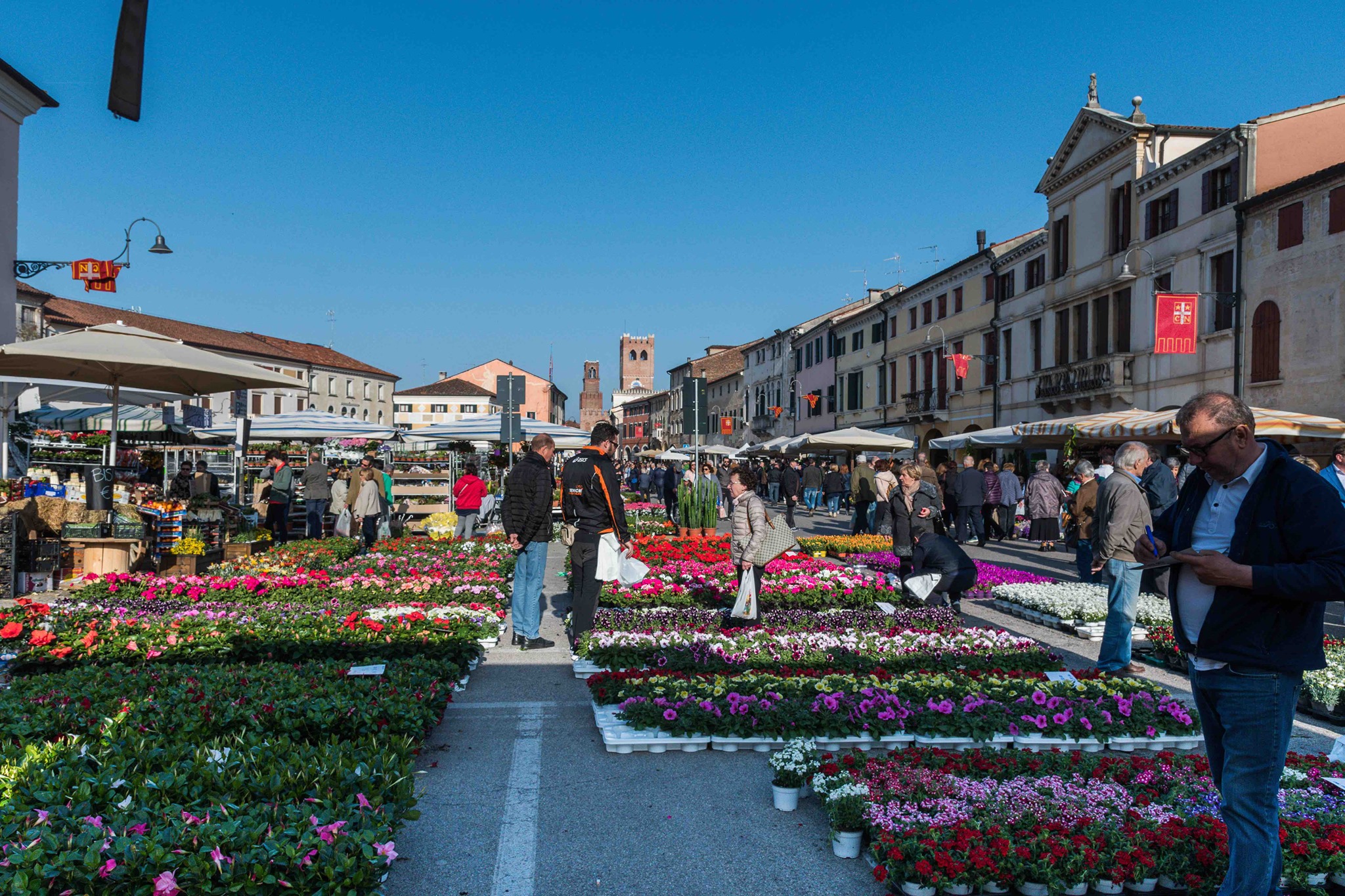
“Sometimes I walk down the streets in my hometown – continues Eleonora Marcato – and I wonder how Noale must have looked like back in Egisto’s times. I imagine the painter strolling under the shade of the medieval Rocca and its towers, observing the calm flowing of the river Marzenego, shopping at the popular city market, chatting with contemporaries like Prandstraller, the Vallottos, the Beninis near the 16th century Peace Column (Colonna della Pace) or inside the Loggia Palace (Palazzo della Loggia). These are evocative places of the town where history, with its archives, monuments and images, blends with the emotions conveyed by the memories of people who are no longer with us.” Around 79 of his paintings on canvas and 19 drawings are kept in the town’s art gallery (Collezione Civica di Noale), whereas some others are exhibited at the Modern Art Gallery of Ca’ Pesaro and the Ca’ Rezzonico Museum in Venice; some of his works are also showcased in private galleries. The beautiful “Regata a Venezia” (1887) is currently located at the Quirinal Palace, in the office of Italy’s President.
Lancerotto belonged to the Venetian School of painters which included artists who practiced painting “en plein air”. Their art was influenced by both the Tuscan Macchiaioli and the French Impressionists, but had also strong links with local tradition in terms of depicting colour and light and the local tendency to choose scenes from everyday life. Looking at his works is like taking a step back in time, to experience traditions today almost entirely forgotten. His favorite themes were romance, families, the lives of both young and older working-class people and views of the Venetian lagoon and the city itself. The leading roles, however, are played by female characters and in his paintings they are depicted, with a high degree of sensitivity, in strikingly elegant poses. They populate the artist’s canvases and in their simplicity win the hearts of the viewers. They are workers, lovers, artists or happy mothers – his works are like tales that enables the reader to appreciate the rural atmosphere and uniqueness of the surroinding area.